
Pattern Recognition: The Bronze Age Collapse (c. 1200 BCE) as a suitable pattern for the coming 'Great Reset'. Pt 1:indications
The end of the Bronze age as an instructive pattern- in dimension and impact for the transition from the 3rd Industrial Revolution to the 4.I.R.- 'helped' by inflation and other potential calamities.

I was always interested to find a reference framework to understand life. What is this thing called ‘reality’? Who provides the dominant narrative?
It appears that the reality model of most people is like the car design- fundamentally it hasn’t changed much since 1899. Or the MS operating system: each version adding a few bells and whistles to the same old cumbersome structure.
In that respect, it is fair to say that the great reset -however disruptive it might turn out to be- will also clear out many obsolete distortions of the past caused by shame and guilt.
I am also concerned with the largest, most comprehensive - ‘inclusive’- view that leaves out as little as possible from the equation, regardless of whether it seemingly contradicts any partial views or not.
That meant looking also at things that normally fall outside the mainstream lens. It meant that where others saw only confusion or chaos, I could see a pattern and dynamics that allowed me to come up with insights that often differed from what was regarded as acceptable by the mainstream.
As Mark Twain had said: ‘Whenever you find yourself on the side of the majority, it is time to pause and reflect’. That’s also why I’m so distrustful and wary of what's coming out of the cocktail & club tie circuits (=the universities and corporate research labs etc)
It is said that Elon Musk has largely given up on today’s human scientific institutions because he thinks science as practised in universities and big organisations has become corrupt, political, and full of groupthink.
All that led me to pattern recognition.
As a frustrated teacher in the secondary comprehensive school system, I had to realise that the traditional main functions of the state-funded educational system were to teach conformity, obedience, and other qualities desired by the nation- and the corporate state and to keep the children safe while the parents are working in the (arms) economy.
I realised that- with the expected waves of redundancies- this will soon be history.
And the curriculum? State schools teach approved narratives that often reinforce the patriotic and nationalist agendas fused with neoliberal principles about the primacy of the market, the role of business, and the science of economics, — occasionally imbued with a socialist Marxist flair. How much that actually is still true is questionable- as medium-sized businesses are increasingly forced out of the market by the relentless market centralisation. Medical schools’ curriculum chimes suspiciously with the interests of the allopathic pharma industry.
Schools, universities, hospitals and prisons are run according to a business model with a ‘guaranteed’ captive ‘audience’ or ‘customer base’ of pupils, students, patients and inmates, admittedly an attractive ( i.e. safe) business model- that is increasingly outdated, top heavy and out of step with wider developments or requirements. But most rules of our reality are written to ensure this reality architecture to remain in eternity.
We all sense that there are changes rapidly coming, changes of mind-blowing proportions.
Most political, economic, and business leaders are ill-equipped to address the unfolding interconnected crises of disruptions to the global supply chains, biosphere changes, corporate monopoly, political oligarchy, IT-financial tyranny, poverty, inequality,- and ownership of the official narrative.
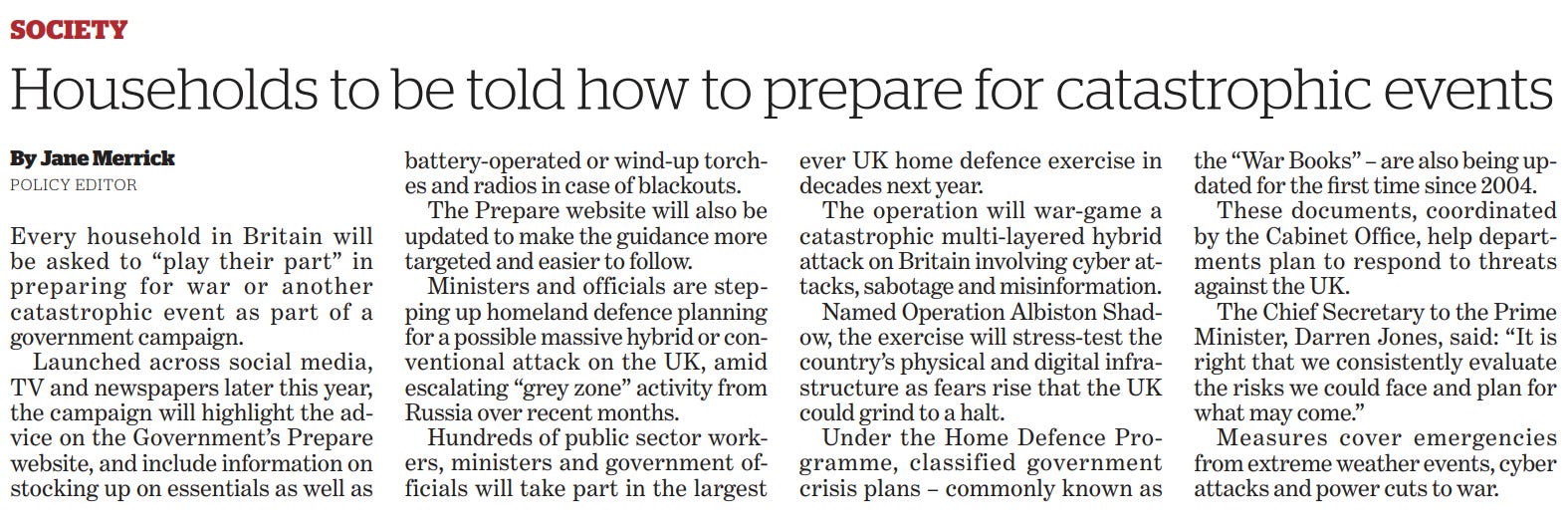
Below is a clip from a recent British newspaper article (the’i’)
The British public should begin taking “small but important steps” to secure and protect water, power supplies and basic phone signal in case of further severe weather emergencies, national crises or cyber-attacks, Downing Street has said.
Darren Jones, the chief secretary to the prime minister, told MPs “the risks we face from climate change cannot be underestimated”, and warned of the “significant and prolonged disruption to essential services” extreme weather events could cause.
Jones also said the combination of increasingly sophisticated artificial intelligence, and the conflict in the Middle East and Russia’s war in Ukraine could enable criminals to carry out “hostile cyber-attacks against businesses and critical infrastructure”
Below: from ‘i’ newspaper ( UK) Wednesday 15 July 2026 page4
.
I’m always looking for patterns. For some years now I have looked at the early 20th century changes, asking: could the period between 1880 and 1945 give us clues what is in store for us now, or for the rest of the 21st century? Clues as to what might be happening between 1980 and 2045? In some of my earlier pieces I have written about that period.
But now there are indications that the changes ahead are of a much larger magnitude than those that happened between 1880 and 1945. Perhaps it is appropriate to call it the multi-factor ‘Perfect Storm’ or the Great Reset’.
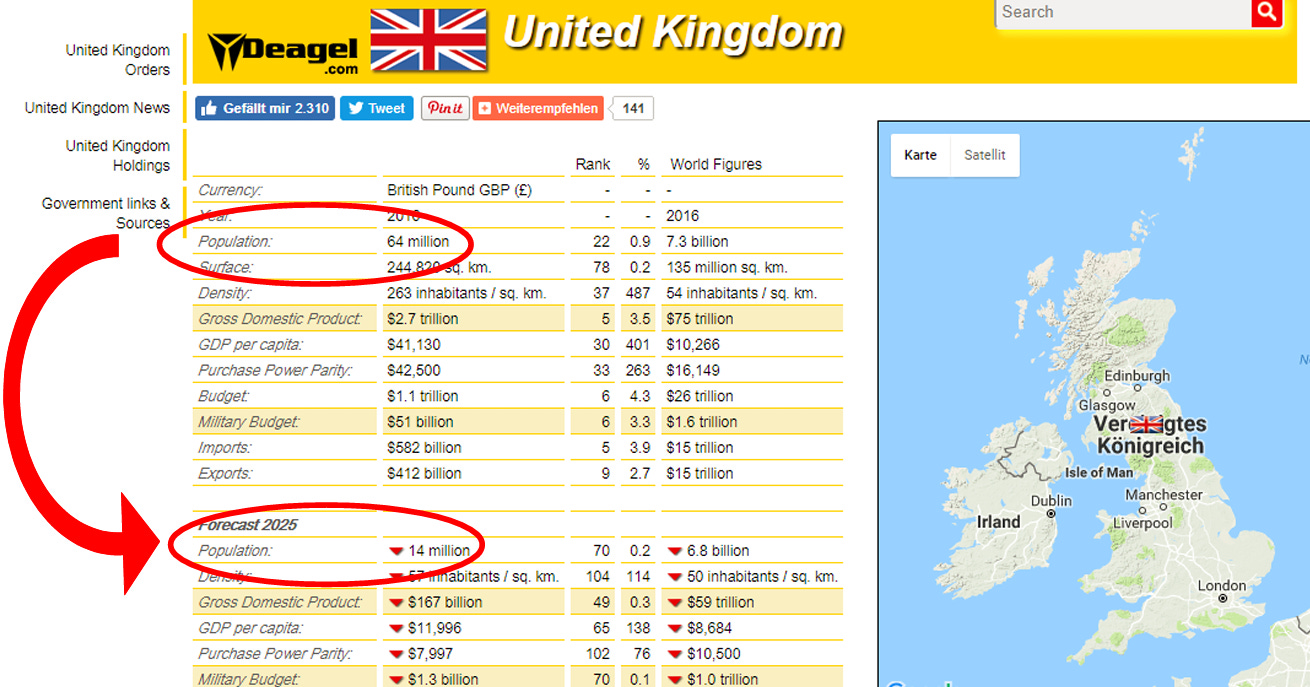
It was the publication in 2017 of the Deagel forecast for 2025 that suggested changes of an extreme magnitude. Though they haven’t yet fully materialised, the implied magnitude of change does allow for some variation on the time axis.
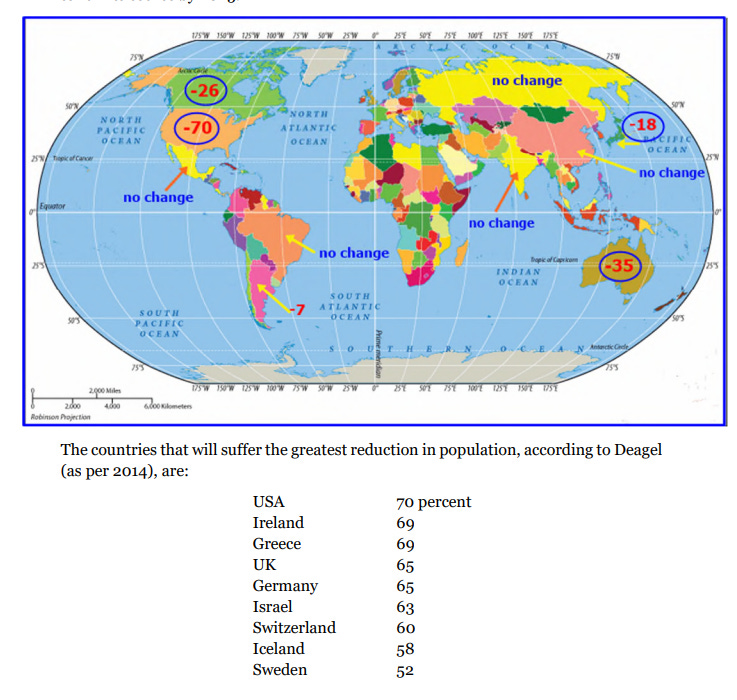
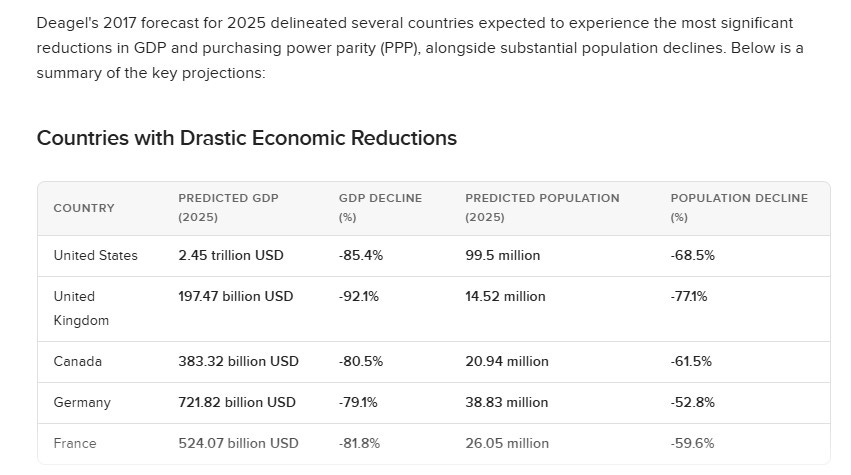
. As spectacular the change in population number was, the reduction in military spending and GDP were equally important
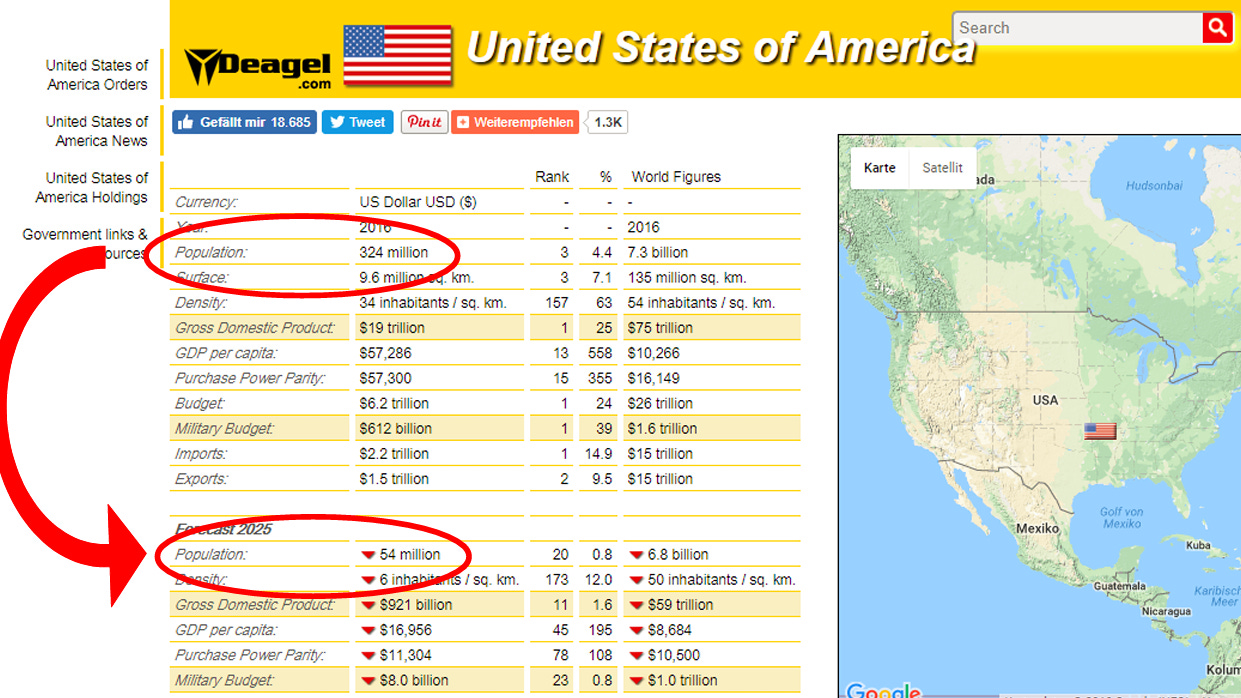
.
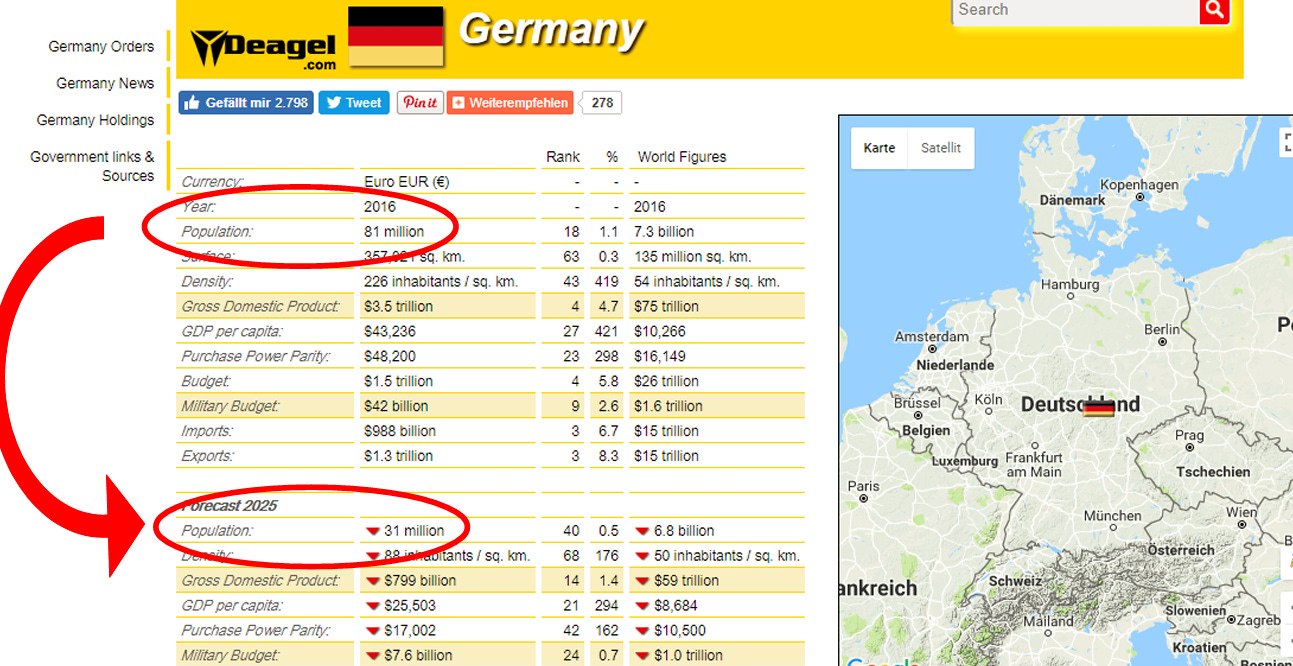
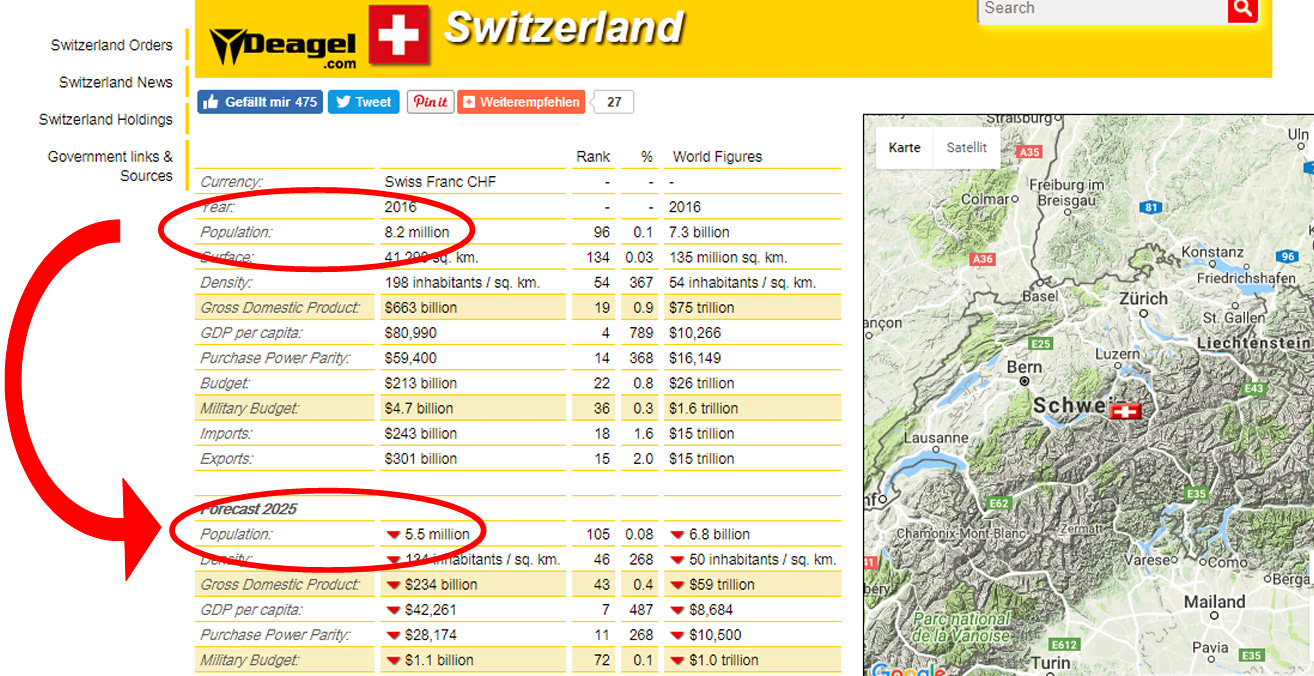
And again the major Western, Christian legacy countries were predicted to experience the sharpest drop
.This was the forecast for Germany
Switzerland
The Agenda 2030 has 17 SDGs. (=sustainable development goals.) They might be well intentioned, but when spelt out, they will change our lifestyle considerably)
https://www.facebook.com/reel/1385209586600480
Like all socio-economic changes, there are favourable, unfavourable or challenging aspects for the societies in which they occur.
Previous industrial revolutions altered social and economic realities, but also political, cultural and institutional aspects.
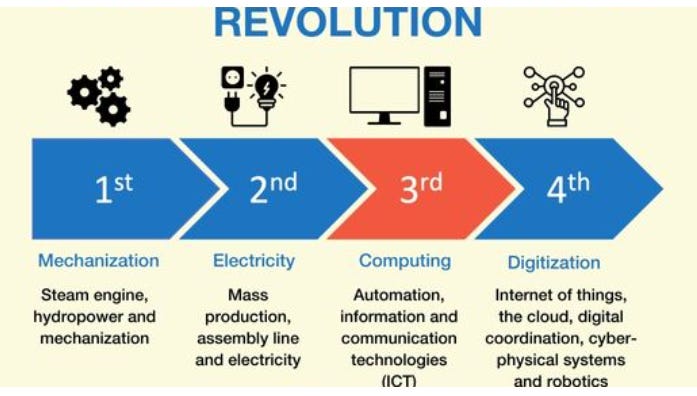
To describe our present position, the following graph might be useful. It suggests that we are presently transiting from the third to the fourth Industrial Revolution. (=4IR)
.
Ultimately, it is less important what the dominant, official narrative will blame for the drastic changes:
The massive disorientation after the waves of redundancies in the wake of the 4.I.R? (That’s the explanation Deagel gave when pressed for a commentary on their predicted changes)
Food shortages as a result of climate change?,
A hostile use of the 5 G radiation techniques targeting the metallic residues in our bodies & changing traditional ailment pattern?,
Catastrophes like earthquakes and tsunamis or fire? The recent fires in the traditional holiday countries of Europe mean that it will get harder and more expensive to get insurance cover in the future.
A breakdown of the electric power grid as a result of solar winds or flares colliding with the magnetic field of the Earth?. ( =geomagnetically induced currents =GICs).
A nuclear war or some presently not publicly known electromagnetic scalar weapons?
The question remains how well prepared the average human is for the demands of the future.
Accessing the psycho sexual energies that will characterise the survivors will bring with it new forms of human community ID, and the dominant epistemology will probably look very different to any of the past that gave community cohesion.
The pattern and dimension- i.e. of the traditional spiritual/ mythological identity and narrative being challenged- provides for a possible painful and disruptive dynamic challenge to the dominant epistemological narrative.
At the end of the Bronze age, it was the Phoenician’s - i.e Tyre and Sidon’s successful fusion of gods, (e.g. Baal), languages, and business practices -that attracted criticism from religious traditionalists who accused the people of those towns of corruption and blasphemy; in the present era, a parallel might be the Christian reaction towards the 4.I.R. and NBIC convergence ( the synergistic integration of nanotechnology, biotechnology, information technology, and cognitive science to create advanced systems and capabilities beyond the sum of individual fields)
Many historians and systems theorists point to the Late Bronze Age Collapse (c. 1200 BCE) as the first “Great Reset.”
The Bronze Age was the third phase in the development of material culture among the ancient peoples of Europe, Asia, and the Middle East, following the Palaeolithic and Neolithic periods (Old Stone Age and New Stone Age, respectively).
The term also denotes the first period in which metal was used. Approximately three-quarters of all known chemical elements are metals. The date at which the age began varied with regions; in Greece and China, for instance, the Bronze Age began before 3000 BCE, whereas in Britain it did not start until about 1900 BCE
The "Sea Peoples" play an important role in the demise of the Bronze Age. It is a blanket term coined by 19th-century Egyptologists to describe the mysterious confederation of seafaring raiders who appeared out of nowhere in the Mediterranean around 1200 BCE. They wreaked havoc, burned cities like Ugarit to the ground, and twice attacked Pharaonic Egypt. They weren't a single, unified alien tribe. They were a mixture of displaced populations—dislodged by drought, famine, and systemic collapse. They were refugees, pirates, and economic migrants forced onto boats when their own inland "Palaces" failed.
In Christopher Nolan’s The Odyssey movie the "People from the Sea" are terrifying raiders composed of returning Greek warriors themselves (like Odysseus and his men) whose prolonged, violent sacking of Troy and abandonment of sacred laws turned them into agents of destruction against their own world. This mirrors the historical reality: the "barbarians at the gate" during the Bronze Age collapse were often just the imploding civilization's own citizens turning to migration and raiding to survive.
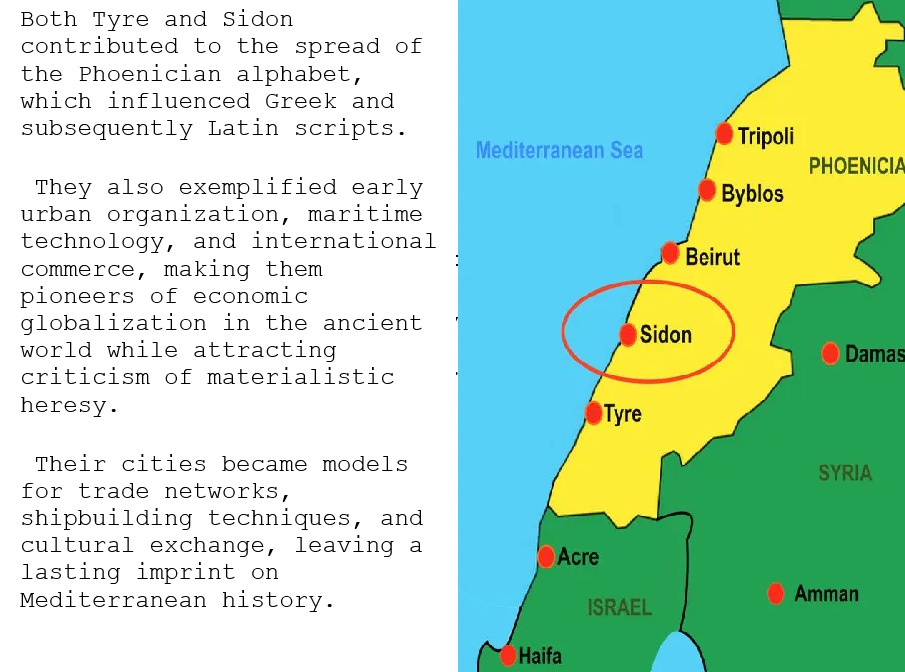
The Phoenician city-states of Tyre and Sidon survived and thrived through hyper-capitalism, trade, and maritime networking. However, in the Hebrew Bible, this immense materialistic prosperity and foreign culture made them the ultimate symbol of spiritual corruption and blasphemy.
Bronze, an alloy (a mixture of two or more metals), is primarily composed of copper and tin. Most modern bronze contains 89% copper and 11% tin, but this ratio might vary depending on the desired characteristics of the metal. This fusion produces a metal that is more durable than each element alone while retaining some ductility, malleability or stretchiness. Bronze alloys can be created by adding trace amounts of other metals like lead, zinc, aluminium, nickel, manganese, phosphorus, arsenic, and silicon.
The Bronze Age is characterized by a wide range of products and artifacts that reflect the technological advancements and societal structures of ancient civilizations. Here are some key items that typified this period:
Bronze tools: Axes, daggers, and spearheads were among the most common tools made from bronze, showcasing the durability and efficiency of the metal.
Bronze weapons: Weapons such as swords, shields, and bows were also made from bronze, indicating the importance of weaponry in warfare.
Bronze ornaments: Personal ornaments like earrings, necklaces, and bracelets were crafted from bronze, often featuring intricate designs and symbols.
Bronze objects: Items such as cauldrons, buckets, and horns were used in various domestic and agricultural tasks.
Bronze artifacts: Artifacts like the Bronze Age shield from Wittenham and early Bronze Age gold earrings from Radley are examples of the diverse range of objects made from bronze.
That collapse peaked around 1200 BCE. By 800 BCE, the world was actually starting to climb out of the dark ages and into the Iron Age. The parallels found in that 400 year window to our present era are the focus of this essay.
Around 1200BCE a highly sophisticated, interconnected world suddenly went dark.
These are the primary parallels between then and now:
1. Hyper-Connectivity and Systemic Fragility
In 1200 BCE, the Great Powers (Egypt, the Hittites, Mycenaean Greeks, and Babylonians) were part of a “Globalized” economy. They didn’t just trade; they were mutually dependent.
The Bronze Age: Bronze requires copper (plentiful) and tin (extremely rare). Tin often travelled thousands of miles from places like modern-day Afghanistan or Cornwall to reach the Mediterranean. If one trade route was cut, the entire military-industrial complex of the era stopped. (Interestingly, some of Cornwall’s old tin mines are now being reopened as lithium and tungsten/Wolfram mines.)
The Modern Parallel: Think of our reliance on semiconductors, lithium and oil. A “hiccup” in the Taiwan Strait or a blockage in the Suez Canal or Strait of Hormuz for oil and energy creates a “bullwhip effect” that disrupts everything from car manufacturing to smartphone availability to delivery drivers and fertilisers and food supply.
If this should combine with global lockdown ( e.g. for the W.H.O. to declare another PHEIC (=Public Health emergency of International Concern) and high inflation we’d have the ‘perfect storm’ that could trigger the Great Reset..
The Modern Parallel: We are transitioning from an industrial/analogue base to a Digital/AI-driven base. Like iron, AI has the potential to decentralise power, disrupt traditional labour markets, and make the “old way” of running a government or business obsolete.
In my next essay, I’ll look at the parallels in detail and the conclusion one might draw in order to be prepared in our present era.
Some sources & further reading
some info on geomagnetically induced currents =GIC: https://library.grid.gevernova.com/articles/when-the-sun-attacks-power-grids-simulation-mitigation-gic-effects
modern ‘star war technologies - from the1980s:
https://www.cia.gov/readingroom/docs/CIA-RDP96-00788R001900680014-4.pdf
Physicist Eric Weinstein on Elon Musk

